Thursday, 23 April 2015

Thursdays with Words: April Reading List

I've been reading a lot more than I have in I can't even remember how long (thank-you, Georgia!), so I wanted to sit down and do some reviews of what I've read recently. Partly I want to just get it out of my head, and partly I hope you can find something that catches your interest. All links will be through my Amazon Affiliates account*. So, without further ado-- what I've read this past month (well, six weeks-ish):

How We Learn, Benedict Cary
Steven got me this for Christmas and I loved it. I loved it for me, and I loved it for my children, and I can't wait to read it again and sit down and write out how these ideas can be applied to homeschooling. It's basically a series of 'brain hacks' to help you retain and memorize information better, solve problems more creatively and efficiently, and generally learn more effectively. I'm probably going to do a longer blog post on it so I'll leave it at that.

The Wee Free Men, Terry Pratchett
I read this right after he died. I had always had the impression that Pratchett just wrote kind of goofy fantasy, but I was wrong. Or at least, about this book. But I will definitely want to read more. I found his work a beautiful blend of humour and poignancy, his culture rich and detailed, his MC thoroughly relatable and awesome, and his imagination wonderful. This story made me laugh out loud and it made me think. I was wasting my time not reading him all these years.

How to Write Science Fiction & Fantasy, Orson Scott Card
I got this because I am working on a fantasy novel; this is also the reason for most of the other books I've read this month and most of the books on my to-read list. I'm trying to get a handle on the genre and some of the aspects I am less strong in. I feel myself to be reasonably strong on the mechanics of writing, but this book focuses on aspects specific to speculative fiction-- worldbuilding, magic systems, types of stories, and the SFF publishing market. I think it was a good base for me, and serves as a good jumping off point for reading SFF with a watchful eye for the elements that make it good SFF.

The Patternist Series, Octavia Butler
I downloaded the first book (Wild Seed) because Card praised it in the above-mentioned book. Then I tore through it, dowloaded the next book without stopping, and tore through that, and so on 'til I'd read all four. A creative concept and I was very surprised the direction it took. All four books are connected, but in a loose, unexpected manner as they travel from the 1600's to a post-apocalyptic society. The writing is spare without being unnecessarily so, and the plot is forefront without neglecting the skill and beauty of the language, which I find rare in plot-driven books. Content advisory: there is a lot of sex in these books. It's not graphic, it's just ubiquitous. The story features essentially the breeding of a new society and the characters are all part of that so they all just end up having lots of sex. You were warned.

The Woman in White, Wilkie Collins
Read this for book club; it's been a while since I read older fiction like this and it was a good shake-up for me, I think. Different language, different style conventions, different social mores and overarching values... I was interested in the story but I had a hard time getting away from the constant commentary on what females can and can't do/feel/think. I read on Collins' Wikipedia page that "He also wrote penetratingly on the plight of women and on the social and domestic issues of his time," so maybe I was just too far removed socially from the time of the book to catch on? Maybe he was being ironic? He seemed to spend for more time than necessary pontificating on what women are intrinstically like, and he doesn't usually decide on the more flattering choices (i.e. weak, emotional, stuff like that). Marian Halcombe is interesting, witty, intelligent, and totally not the love interest in the story, which role is instead fulfilled by her angelic, blonde, and boring-as-heck half-sister Laura. So that annoyed me the whole time.

Update: This was still bugging me so I did a quick Google of "feminism the woman in white wilkie collins" and came up with this blog post which does enlighten me a little. Commentary on unjust marriage laws, strong female character, types. Ok, cool. Still a little annoyed but less so.

Mistborn, Brandon Sanderson
Read this on the plane back home for Easter (and then all the next day when I was supposed to be actually doing stuff like mothering my children and unpacking). I'm working on writing a fantasy novel so I'm trying to read more in the genre, get a better feel from the sweep of fantasy and hit the big authors in the field. I enjoyed the magic system (Allomancy) in this book, which was intricate, internally consistent, and unique. The characterization and development was decent and the writing also fair to middling, although Sanderson did feel the inexplicable need to use the word 'maladroitly' like four times which is totally uncalled for. But (spoiler alert) Jordan used the word 'rictus' even more than that in Eye of the World so it was probably a good thing Sanderson was chosen to continue the Wheel of Time series...

The Eye of the World, Robert Jordan
For the whole first section of the book I had a very hard time separating my opinion of the elements of this book that have become tropes from my opinion of the actual writing, but as I got deeper into the story, as things got more immersive, I was able to set that aside. The further in I got, the more I admired Jordan's worldbuilding and creativity. I still don't find the writing style very much to my taste, and I was annoyed throughout the book about the way he wrote women and the way he wrote male-female relationships (like, everybody had to mention about how they could never understand the other gender), but the story, the scope, the world, the magic, were all beautiful and well-done.

*And hey: if you buy any of these books through my links here, I get money! So, just a thought...

Wednesday, 22 April 2015

Writing: Conventicle, Chapter Three

At the doorway to Signa’s apartments, Aldous hesitated. What she intended to do was not illegal or dissenting but nevertheless it was not Done. Not by the good families, the Queen’s people; not by Aldous. Still, the whispers that would go ‘round about her if it got out that she’d been travelling the city alone with a dissenting man would be easier to bear than the ones that would go ‘round if news got out that her brother was himself a dissenting, and banished from his aunt and uncle’s home. Signa was the nearest thing Weiss had to a friend, as far as Aldous knew, and odds were they had been drinking together last night. Aldous held her head a moment as if it might burst, and then rapped smartly on Signa’s door.

There was no answer, which of course she had expected, so she sharpened her tongue and her eyes and entered. Signa was sprawled snoring on a low sofa amid a squalid mess of bottles, rags, the burnt-clover smell of discarded packets of hyssop-and-achanes.
“Good morning, Signa.” Aldous didn’t raise her voice, yet her tone was pitched to shard through the tangle of the room and Signa’s ale-soaked head. He groaned and rolled over.
“If it’s still morning,” he mumbled, “then you aren’t welcome. Whoever you are.”
“I assure you this isn’t a pleasure call,” returned Aldous, her voice getting crisper by the word—she was enjoying this, rather, in a sort of ashen way. “I’m looking for my brother Weiss.”
“Jesh and Elio!” swore Signa. “It’s not my watch where he is,” and he rolled over to face away from Aldous.
“Have it your way,” Aldous murmured, and walking round the sofa, threw the shutters wide. Late morning sun flooded the room, striking Signa full in the face, and he swore again and rolled off the couch, thudding ungracefully to the floor.
“Damn you, woman, shut them and I’ll tell you anything you want to know!” he growled, one hand shielding his eyes.
“Better.” Aldous dimmed the room again and crouched sternly at Signa’s shoulder. “Tell me what you know about where my brother is.”

#

Signa was still muttering about how it wasn’t his watch where Weiss was when they made their way out the Peddler’s Gate—Aldous shot a look at the guards that dared them to question her—and onto the marshes in the direction of the reported Thron camp. Aldous, for her part, was too self-controlled to give voice to the steady stream of curses that was running through her head, but inside she was using every oath she knew. Throns! She couldn’t imagine a more scandalous choice for her scandal of a brother to throw at her. She held up her silvery skirts from the squelching mud that lined the highway out of the city.
“Do you mean to search the whole marsh?” said Signa after a time. “Weiss only said he were leaving; he never said where to.”
“I’ll find a Thron and make them tell me,” said Aldous imperiously. Signa scoffed but she ignored him. She was angry as a blood orange; she would find a Thron and make them tell her if her very head burst in the attempt.

As it turned out, they hadn’t to try very hard. The smoke of the Thron camp was still a smudge on the horizon when they noticed to the east of the highway the smoke from a single fire, and a path crushed through the reeds. Aldous raised an eyebrow at Signa and he nodded sullenly. The sun was only just beginning to dip into its afternoon descent when they reached the empty camp. There was a smouldering heap of ashes that had not long since been a fire, and beside them Weiss’s fingerless gloves lay neatly stacked, as if discarded on purpose. There were signs of two trails leaving the clearing; one ran southwest towards the Thron camp, and the other straight east, for the mountains.
“Why would he go east?” mused Aldous, looking from one trail to the other. Signa shrugged in the corner of her vision and she pounced on him with vexed satisfaction.
“There’s talk, that’s all,” said Signa. “If he’s talked to a Thron, it may be… There’s talk of a way through the mountains, a poor road, a dark road, the Throns be calling the ‘King’s Highway’.”
Aldous formed her mind quickly into a white still wall as she made the coronate sign, three fingers raised and pressed against her shoulder: Long live the Queen. King’s Highway! She almost spat.

Aldous was weary from this trek out into the marshes, used as she was to attending political meetings, sleeping late, the ordered, unhurried life of an undissenting. But anger and worry gave wings to her feet, and Signa’s complaints made her stalwart, and about three-quarters of an hour later, she saw Weiss ahead of them.
“Hi, Weiss!” she hailed him, refusing to give vent to the rather sharper words that had formed in her head at the sight of her brother’s reprobate enthusiasm wading through the marsh reeds.
He turned, mouth agape for a satisfactory moment, and then shook his head as if to clear it.
“Aldous, Signa? What are you doing here—and together, no less?”
“Signa has very kindly agreed,” said Aldous in a sweet hiss, “to help me find you and bring you back from whatever fever or madness has afflicted you.” She knew how he would answer, the pine-green scribble of his wilderness lapping on the disdainful shore of her uprightness, and she was surprised when he was instead simply grave and earnest.
“Aldous, I cannot. Aiken is behind me forever, sinking as it is into sulfur and broken stones. Come with me.” He turned also to Signa and said it again, a silver fish of strangeness: “Come with me!”
His very tone goaded Aldous into a contempt such as she had never felt before, even at the most disgraceful of his antics.
“Madness…” she said softly, a grey crystal catching the light and killing it. “Have you left no sense, man? To leave Aiken for some wild fear put into your mind by a wandering Thron? To invite us along with you, urging us to leave homes and safety and pleasures—and for what? To walk headlong into lonely, forbidden death with you? Oh, Weiss—“ she almost purred it—“Weiss, even you cannot be so very foolish as that!”
“It is not death to which I travel,” said Weiss, still maddeningly grave, “but life. Life such as I had never dared imagine before yesterday. Come with me, and prove my words.”
“What is it you expect to find on this thrice-cursed ‘King’s Highway’, that you will leave everything sane behind you for it?” said Aldous, drawing back from him a little.
“Peace and light and colour,” said Weiss. “A city unbound, unfading. Here; I was given a map—” but Aldous pushed his outstretched hand away from her as if it were a snake.
“Back with your map!” she scolded. “Tell me plain, will you come back with me today to Aiken, let me reason with our uncle and save yourself from disgrace?”
His set face was answer enough.
She waited, two heartbeats, three, four. No plan suggested itself to her. Certainly Signa could not have taken Weiss by force even if he were not suffering the effects of a night’s carousing, and Aldous had no words to give combat to that still certainty that seemed to have made a stranger of her brother.
“Come, then, Signa,” she said, turning her back on Weiss. “We will go back without him. He has been taken for a fool by a Thron’s fancy and thinks himself wiser in his own eyes than seven men that can render a reason.”
But Signa did not move.
“Brain-sick as the other,” she said at last, scornfully. “And why should I have expected better of one such as you?”

She walked home alone through the tunnel of reeds, and she did not cry, by Jesh and Elio! She did not cry. Her fierce shoulders and her furious head made a coronate sign of her body as she walked unhindered past the guards, who knew a Queen’s woman when they saw one, even were she walking muddied and hot in from the marshes with her hair a pale halo around her skull.

Tuesday, 21 April 2015

Toddler Tuesdays: Leapfrog Letter Factory

As we started working our way through School Sparks, I realized that before we could do the letters section, Scout Kid needed some serious phonics help. He knows his letters backwards, uppercase and lowercase, can write them all with minimal help, and has a few sight words, but he really only knew a handful of the phonics sounds despite, I thought, me being pretty regular about talking about them. 

I got this movie on the recommendation of a friend-- she used it for her kids in the past and apparently it works like magic for teaching kids phonics sounds. Since I am all about education in the form of magic, I bought it and, yep! It's magic! Scout Kid went from basically not knowing more than a few letter sounds to knowing them all in two days! The video doesn't cover long vowels, alternate sounds (such as for c, g), or digraphs, but it's a good start and Scout Kid found it effortless and engaging.

Find it on Amazon for $15: Leapfrog: Letter Factory (link through my Amazon Affiliates account). 
Monday, 20 April 2015

Music Mondays: White Lies, There Goes Our Love Again


Been on heavy rotation lately as we've been driving all over creation. Highly recommended road trip music.

Sunday, 19 April 2015

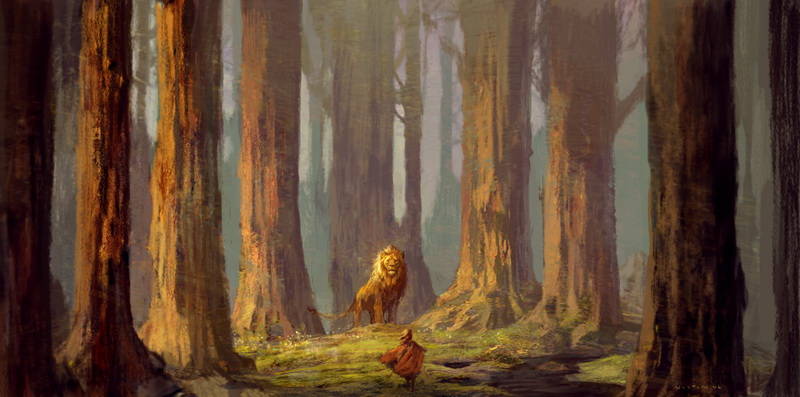
Saintly Sundays: I Was The Lion


“I was the lion who forced you to join with Aravis. I was the cat who comforted you among the houses of the dead. I was the lion who drove the jackals from you while you slept. I was the lion who gave the horses the new strength of fear for the last mile so that you should reach King Lune in time. And I was the lion you do not remember who pushed the boat in which you lay, a child near death, so that it came to shore where a man sat, wakeful at midnight, to receive you.”
― Aslan, from The Horse and His Boy, C.S. Lewis

I want to pay better attention to the voice of my God saying "I was the lion..." in my life. Sovereign and difficult and good.

Wednesday, 15 April 2015

Writing: Conventicle, Chapter Two

            Weiss worked his nails around the edge of his scab. It was dawn. He wished he could pull out the knife that seemed wedged in his head. He wished the sun would stay down. Pity the drunkard shepherds who do this every week! Although, Weiss had to grant, they likely didn’t antagonize people into throwing them at walls every week; that part was his own peculiar suffering.
            Weiss found a convenient rock and sat for a while. The marshlands were stretched out all around him; mists rose off them in grey tendrils as the sun shed its white rays quietly over the horizon. Somewhere ahead, the Thron camp. The end of the grey. The end of hell?
            At the mercy of his headache and feeling a burning thirst, Weiss felt pitiable. The glory of last night had dissipated into marsh-mist, and he was a cornered animal. Weiss knew every dissenting in the city, and they were all grey, brown, weighted and waiting for the end of the world to be better this year. He had to force himself to stand and keep walking.
            The reeds here towered above a man’s head, with dark tangled trees dotted here and there like sentinels. It was no easy task, passing through the marsh. After a time, Weiss tried to laugh at his own pitiable misery, but the laugh was stillborn; he tried in vain to animate its dark limbs. He found himself weeping instead.

            “Sir,” said a voice, dancing across the notes of a song Weiss did not know, “Why do you weep?”
            Weiss’s head snapped up and he stared at the woman who had spoken—a Thron; there was no doubt about it. She met his eyes with black eyes at once peaceful and vigorous. Her dress was more tied around her than sewn to fit her, just swathes of crimson fabric gathered into a knot at one shoulder. The dark skin of her arm was tattooed with a darker bond-harp, and she had a ring of gold in her nose. Aldous wore pale grey, undissenting, and this woman carried herself like Aldous, like someone who knew they had nothing to fear from the Geridspolice, and yet she could be killed simply for talking to Weiss. His heart clutched at her like a drowning man.
            “Are we not all this miserable?” he demanded desperately. “Are there any who do not both long to die and dread it?”
           
            Somehow, he found himself at her fire. Mare, her name was. She warmed broth and gave it to him, watching him carefully. Her movements were kindly, almost motherly, though she could not be much more than his own age.
            “Why not die,” she said softly, “if life is so filled with misery?” The question seemed dizzyingly unfair. Weiss had known more than his share of dissenting who had tried that route, even one or two that had committed ritual suicides in the pathway of the Queen as she made tours of the city, but none of them had ever looked as if they had found peace and vigour for it. All of them had died hauling their souls in shades of grey and brown with them, something heavy and pitted like corroded iron that could not be shaken in life or in death. All of them had been buried or burned with their Deedsweight still cruelly bound across their shoulders, heavy and dense as iron. Bound on them at birth and supplemented every day with new Deeds. Weiss felt his own Deedsweight sternly lashed to his back with unbreakable cords across his chest and his shoulders, and he looked beseechingly at Mare. What passed through his mind was more than he knew how to say with someone there listening, but her eyes seemed to understand.
            “I have never seen,” said Weiss, and his voice was like a child crying because they have missed a fair. “I have never seen!”
            She waited patiently as he keened and rocked himself. At last he controlled himself and said,
            “How can I go into the blackness of death, knowing I carry with me only the knell of my own Deedsweight? There will only be darkness beyond, darkness and pain for me.”
            She pressed her lips together, and said,
            “It is death to me to say it in this country, but you speak true, man of Aiken. The living in Aiken crumple under their Deedsweights and in dying they are only crushed still further, dragged away from the sight of Elionae our Maker and Judge.”
            It was a name one heard, sometimes, in Aiken: a curse, a ward, an idea for philosophers to bandy back and forth, but the way Mare said it was different. Arrow-straight. Weiss found himself leaning into the promise of her words.
            “If this is your position, Weiss,” she said, “they why do you stand still?”
            He looked up at her in wonder. He knew all the dissenting in Aiken, how many had discussed with him defiance, self-immolation, luxury, all the creeds. And she asked him, straight as arrows, why did he stand still? He lifted his head, moss brushed from a very old stone steps.
            “Where shall I go?” he said.
            “Do you know why Throns are camped here, in defiance of your police?” asked Mare. Weiss shook his head. He was a boy of eight watching a mumming, eyes wide, breath caught, waiting for the story to resolve. “There is death coming to this city. We must warn all that we can, to flee before it breaks: fire, shaking of the earth, splitting of the stones.”
            “Why bother with them?” said Weiss, feeling ashamed as a boy of eight as soon as he said it.
            “Man of Aiken,” she said solemnly, “we were once as them. We were once as you.” Weiss bowed his head, and the sun bent on it and his head hurt a little less. “There is escape. Do you see,” she turned to the east and pointed to the dim shapes of the mountains there, “the pass between the mountains?” Weiss strained but could not see it. The grey shapes slumped against each other and the haze of water shimmered over the marsh.
            “I believe that it is there,” he said simply.
            She laughed at that, like a child clapping its hands over a bauble, a mirror held up to her motherly face. She was both old and young, solemn and lighthearted.
            “It is there,” she said. “And beyond it—many things. Places of fear, some of them, places of enmity, but also places of peace, and places of light and colour. And Jesh’s Land, where exists the one sword in the land strong enough to cut through that cord that binds you.”
            Weiss scoffed, and then felt ashamed again.
“I beg your pardon,” he said. “But nothing cut the cords of a Deedsweight. I have never heard of anything that can break it.”
Mare had a strange look in her eyes, sad, and luminous, and glad, and full of longing, and she angled her shoulders so he could see her back. Weiss caught his breath and half reached out to touch her, and then drew his hand back, wondering. Above the crimson folds of her dress, scars criss-crossed her shoulder blades, the worn grooves that he could imagine laced his own back under where the Deedsweight had clung all his life. But on Mare’s back, there were only the scars. No close, cruel weight, nor dark red cords, but just her skin, free, unbound. Unbound! Weiss wept again, and she wept with him, and perhaps neither of them could untangle the threads of sorrow and joy they felt.

Mare’s eyes were shining with salt and light as she spread out a map between them, and she spoke like a woman naming her lover when she said, “Let me show you the way to Elionae’s City—by the King’s Highway through Jesh’s Land."

-----

In the courtyard of her uncle’s home, Aldous paced, venomous, terrified.
“Come home, Weiss, come home! You’ll not bring scandal and shame on me; I’ll not let you get yourself cast out of this house like the riff-raff you are.”

But it was nearly eighth bell, the sign high in the sky, and no sign of him. Aldous pulled a grey cloak over her grey dress and made her way venomous and terrified across the grey stone streets of Aiken. She knew where to begin hunting.

Tuesday, 14 April 2015

Toddler Tuesdays: School Sparks Preschool Worksheets


Hi guys! Sorry for the radio silence. Life and stuff, you know the drill. So! I'm currently in the backcountry of Georgia for work, and we don't have much in the way of school or craft supplies. Scout Kid was getting a lot of mileage out of colouring the Shake N' Steak hats we got, but I thought maybe something a little more challenging was in order. Did some browsing on Amazon and came up with this lovely workbook, School Sparks. It's got 450 tear-out pages of worksheets in fine motor control, numeracy and early math, letter recognition, writing, visual discrimination, all the good stuff.

Scout Kid has been eating it up, doing a few pages in each 'subject', if you will, every morning while Feral Kid naps. It's interesting to see where, as a newly-minted three year old, the sheets are too easy (visual discrimination is totally unchallenging for him) and where they are too hard (mazes are still tough, can't really do initial phonics sounds or rhyming words at all. He outright tells me he has no idea what I'm talking about when I try to explain the concept of initial sounds.) It gives me an idea of where to focus our work going forward-- on which note, anybody have a good phonics app/game/workbook to recommend?

School Sparks also has a website with printable worksheets. FYI, the Amazon.ca link is currently listing the book for $300 used, but I paid $18 used here in the States, so maybe this is not a good time to buy through my Amazon Affiliates link?

Wednesday, 8 April 2015

Writing: Conventicle, Chapter One


            Weiss was a bitter stardusty person, mind like an assassin’s knife, face rough with unshaven hair and the mangledness of segregation. Sometimes he sat on the bridge outside the city and tossed rocks into the river by the handful. Sometimes, the river barges went by and he tossed rocks into them, too. Sometimes he got beaten by angry bargemen. Their fists found the soft places of his body, and his mind laughed and laughed at them and remained unconquered.
                        Sometimes, one day, it stormed as if midnight were coming instead of dawn. Weiss walked on long wet grass that crushed and matted under his boots. Water pressed into the spaces around his feet as he walked through the marsh. Sometimes Weiss made his living gambling, and sometimes he took money from sodden shepherds to watch their flocks on sodden days. Walking black-booted over the quiet fields with his black cloak swirling around a shepherd’s staff, he looked half-gone. He pressed his hands into the water running down from his cap onto his cheekbones.

-----

            Out there, nobody bothered you, and the sheep minded their own business, but that day through the rain and thunder came a stranger thunder, and Weiss saw down the long sword-straight road that ran into the city six swift horses, dressed like machines of war. On their backs, six Geridspolice in blue-grey cloaks like wet-skinned wolves pounded their mounts relentless into the city, clawed swords criss-crossed on their backs.

            Weiss was not easily conquered but the Geridspolice were not easy. Needing something to shroud him from the fog, Weiss took a pipe from his pocket and chewed on it. The riders flew north, and the rain closed around them, leaving only marsh grasses waving in their wake, and Weiss took a little knife and whittled some damp wood. Alone with the sheep grazing stoically in the wet grass, he asked into the silence a question that the sight of the Geridspolice had wakened:
            “Now, what is freedom?”
            The sheep did not look up.
            “Freedom,” he informed them, “is like dying in an empty shed with tied hands and broken ribs. Freedom is brown shabby clothes, broken promises and the women and the men… the men like me. Freedom is descent.”
            Weiss had seen men and women who believed everything under the sun. He knew every dissenter in the city. He knew all the people who counted themselves free from the state, and his face twisted in disgust over them. Free? Free to walk in little hells that no one else could share. He knew people who counted themselves free to walk in any path their body desired. Free to torture themselves into madness. Weiss knew the Queen’s police, fighting to keep the undissenting free to give money to the Queen and live small neat grey-tone lives. Weiss knew the undissenting, like his sister Aldous, who thought they would eventually find color in their greyscale existence. Weiss knew himself, dragging every streak of brown he could find into his grey life. Free to paint his existence into a mudslime of colorless stains. Weiss twisted his whittling knife very softly around his fingers, menacing himself. Free to die in a shed he had built for himself. Free to die, dying to be free, deathly free. Weiss pressed the knifeblade against his callused thumb. Free to go on a little while longer.

            Weiss wondered what the Queen thought about when she couldn’t sleep.

-----

When Weiss was walking home in the early hours of the morning, having propped a drunken shepherd against the gate of the sheep-pen, and helped himself to the price he had been promised—perhaps only a little more-- he met a troop of the Geridspolice marching south. They had coronate badges on their shoulders: the Orthodoxers. Weiss moved aside hurriedly.
“Stay in the city, fool,” said a soldier, thumping his shoulder roughly. “There are Throns camped in the marshes.” 

Aldous was waiting at the courtyard. Weiss made her a shifting, soft bow of anger.
“Sister,” he said.
Aldous said many things, her neat small grey head bent in earnestness. She told him their uncle and aunt were almost ready to put him out on the street. She told him he was becoming known as a dissenter. She told him to think of others—her, for example—for half a moment when he caroused and gambled and drank himself sick in dangerous company. When he said nothing, she choked out a kindly mocking laugh and gestured her head at his whole body, woolen gloves with cut-off fingers, dirty face, deep scars from his fights.
            “What impeccably bad taste you have,” she tried.
Weiss rubbed his fingers together, Aldous’ words making a tearing sound in his head.
“Keep your good taste,” he said, and spat into a puddle in the courtyard, dark water reflecting the dark sky. “It won’t save me.”

He did not go in to supper. There would be time enough later for ale and meat and cheese, at a public house, but here he would take nothing, not from people who wanted their own kin out on the street for asking a few questions.

-----

            Several hours later, Weiss got into a bar fight. After a brief interlude of glorious chaotic riot, Weiss found his bruised exultant body deposited in the street. He sat for a few minutes in the rubbish, feeling at home, and then got up sternly and unsteadily. He tottered blearily against the wall and began a slanted journey down the street. He was thick with purpose, but as thick with the bar’s strong bitter, and he did not move as purposefully as he would have wished.
            “What price freedom now?” he slurred to himself.
            A hard man, looked like a sailor, walked out of another bar a bit further down the way. Weiss tried to hurry to him.
            “I’m drunk,” said Weiss, stumbling to a halt in front of the man. The man grunted. “I’m never drunk,” continued Weiss in an awed tone. “They told us not to leave the city. Throns, you know, camping in the marshes, filthy unnatural Throns the soldier at the bar said.”
            The man shouldered past Weiss none too gently and Weiss grinned. He was stronger than he looked. He pinned the man against the wall for a moment.
            “So I decided I’d get drunk and go find ‘em. Natural, you know,” he said, drawing out his words to match the angry rise and fall of the man’s chest, “is making everybody here miserable.”
            The man, who, unlike Weiss, was exactly as strong as he looked, threw Weiss off. Weiss took a glorious blow to the head from the brickwork of the bar’s window ledge. He patted the wall like a friend, and looked up at the man.
            “G’way,” Weiss said tersely.
            The man kicked Weiss’s legs and left.
            “That’s right,” said Weiss. His voice slipped up, louder and louder. “You stay in hell. Grey as night it is! Stay here where it’s all natural-like and grey as night!” The man cast a disgusted backwards glance at him.

            “I’m leaving anyways,” said Weiss, very quietly. He smeared the blood on his head across his temple like baptism, and began working his unsteady way out of the city.

Monday, 2 February 2015

Music Mondays: Toumast, Tallyatidagh


I've had this album for a few years, but suddenly this week I found myself bowled over by this song. On repeat.